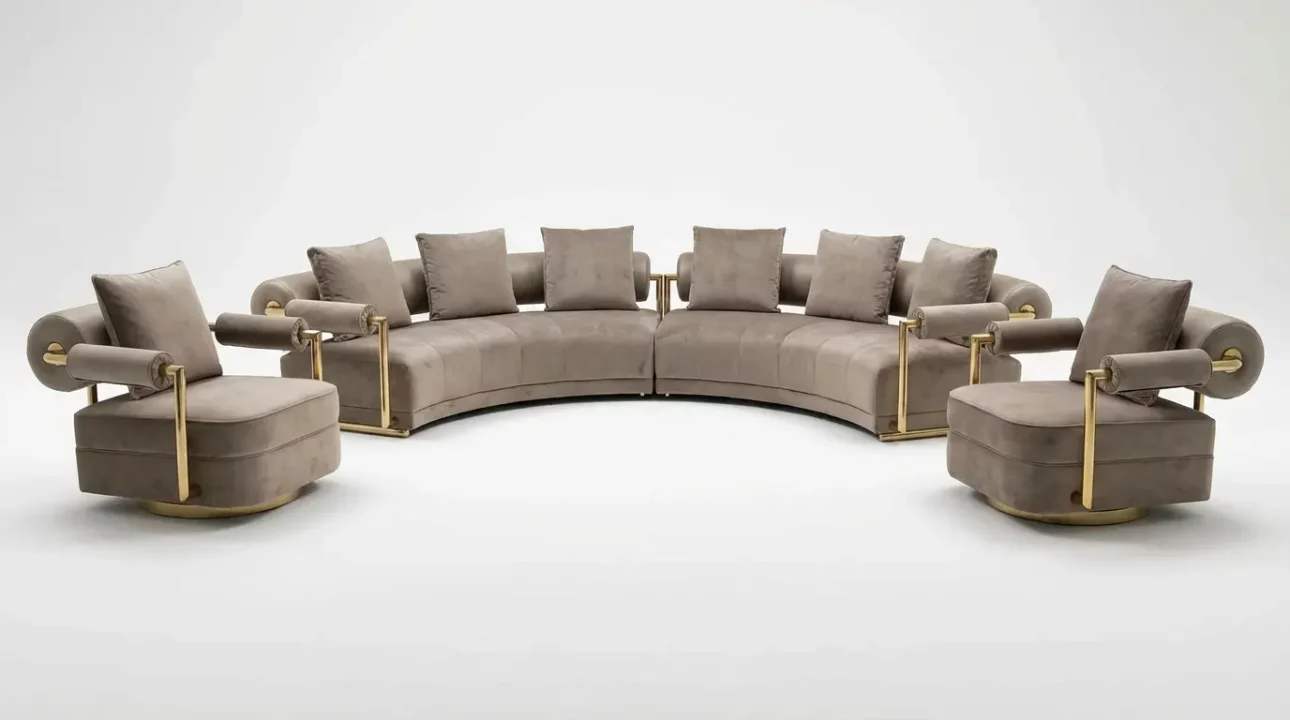
Italian furniture models are not merely aesthetically impressive products; they are also powerful design elements that lend character to a living space.
Italian furniture models are not merely visually impressive products; they are powerful design elements that give a living space a distinctive identity. With elegant lines, high-quality materials, refined craftsmanship, and timeless forms, Italian furniture can be used across a wide range of interiors, from classic luxury to modern minimalism. However, making the right choice in Turkey requires more than focusing on appearance. The quality of the wood, fabric and leather, dimensional compatibility, after-sales service, and the reliability of the manufacturer are all decisive factors in the purchasing process.
In this guide, we examine the essential character of Italian style, the differences between classic and modern models, the advantages and disadvantages of commonly used materials, the factors that affect pricing, and the critical points to consider in the Turkish market. We also compare imported furniture with locally manufactured bespoke alternatives, evaluate the contribution of professional interior design support, and explain how solutions such as an interior design service can help apply this aesthetic more successfully to a specific space.
Why Are Italian Furniture Models So Popular?
Italian furniture models attract significant interest because they combine bold aesthetics, high material standards, and the promise of long-lasting use. The approach promoted for years by Salone del Mobile.Milano, widely regarded as one of the global showcases of the furniture industry, is not simply about “looking stylish”; it is about achieving the right balance between proportion, comfort, and craftsmanship. Italian style therefore offers a strong choice for different customer profiles, ranging from classic opulence to modern simplicity.
Advantages and Limitations
Genuine leather, solid wood, marble, and premium-grade fabrics are among the greatest strengths of Italian-style furniture. These materials add value to an interior, although imported products may involve disadvantages such as longer delivery times, currency fluctuations, and more limited access to service. In Turkey, made-to-measure production supported by an interior design service can offer a more controlled alternative. Especially in large living rooms, solutions that provide the visual character of imported furniture while being adapted to local requirements can be advantageous both financially and functionally.
Recommendations for Making the Right Choice in Turkey
Experts generally recommend considering after-sales assurance as carefully as design. In Turkey, the quality approach of the manufacturer or seller is important in terms of warranty and service. Buyers should therefore review the brand’s quality policy, corporate background, and, where applicable, indicators such as the MEP certificate. For customers seeking bespoke production in the local market, brands with a strong manufacturing history and completed projects provide a more reliable basis for comparison.
The Most Common Expectations of Buyers Researching Italian Furniture Models
Customers researching Italian furniture models generally have three main expectations: creating a distinctive aesthetic, using durable materials, and clearly receiving value for the price paid. Classic models create a strong character through elaborate carved details, genuine leather, and solid wood, although they can appear visually heavy in smaller apartments. Modern Italian design offers a simpler, lighter, and more urban-friendly option; however, some users may find it less “monumental” than the classical style.
Experts frequently emphasize that buyers should focus not only on appearance but also on frame construction, veneer quality, and stitching workmanship. Showroom experience, made-to-measure production, and after-sales support therefore provide major advantages in Turkey. Brands offering an interior design service can also plan more accurately whether a particular piece will truly suit the space.
Imported products are strong in terms of brand perception, but delivery time, currency fluctuations, and access to service can be disadvantages. Local bespoke production, by contrast, stands out through personalization, dimensional compatibility, and better budget control. At this stage, buyers should carefully assess the brand’s background, manufacturing approach, implementation examples, and trust indicators such as the MEP certificate. Before ordering, materials should also be specified in writing and quality standards verified through the brand’s quality policy for a safer purchasing process in Turkey.
The Origins and Design Philosophy of Italian Furniture Style
Italian furniture models trace their roots to Renaissance craftsmanship, while their contemporary character was shaped by 20th-century Italian industrial design. For this reason, the style is built not only around aesthetics but also around material integrity, ergonomics, and longevity. Poltrona Frau’s often-quoted philosophy that “our hands are the most advanced technology in the world” effectively summarizes why craftsmanship and technology are considered together in Italian design.
The Difference Between Classic and Modern Approaches
Classic Italian design features carved details, polished wood, and a strong decorative presence. Its advantage is a sense of grandeur and prestige; its disadvantage is that it can feel visually heavy in smaller spaces. Modern Italian design, on the other hand, is defined by cleaner forms, subtle metal details, and neutral colors. Its advantage is greater flexibility and a contemporary appearance, while the downside is that poor material choices can create an atmosphere that feels overly “cold.”
How to Interpret and Buy Italian Style Correctly in Turkey
In the Turkish market, directly imported products offer brand value and access to original collections, but usually come with higher delivery times, currency exposure, and service costs. Local bespoke production is more practical in terms of dimensional compatibility, project-based revisions, and after-sales service. It is therefore advisable to use an interior design service to select furniture according to the proportions of the space and to review the manufacturer’s quality policy and warranty approach. Warranty documentation, delivery scope, and installation responsibility should also be clarified under Turkish Consumer Protection Law No. 6502. Among manufacturers interpreting Italian aesthetics locally, brands with a strong corporate history can provide a more balanced option with reduced operational risk.
From Traditional Craftsmanship to Modern Living Spaces
Italian furniture models represent a strong design language that adapts traditional craftsmanship to the speed, comfort, and practical expectations of contemporary life. The classic approach creates prestige through solid wood, carved details, and expressive forms, although it may require more maintenance and larger spaces. Modern Italian interpretations use cleaner lines, fine metal details, and lighter tones, making them more practical for apartments and urban living, although they provide less of the dramatic impact associated with classical interiors.
Experts consistently emphasize that aesthetics and functionality should be assessed together. In the Turkish market, frame durability, fabric performance, and after-sales support should be compared alongside appearance. Warranty documentation and delivery conditions should also be clarified under Consumer Protection Law No. 6502. Brands that publish a clear quality policy, offer project-based measurement services, and provide trust indicators such as the MEP certificate therefore have an advantage.
For buyers deciding between imported products and local bespoke production, the most practical recommendation is to prioritize a space-specific solution. With an interior design service, dimensions, layout, and material selection can be planned together, while similar applications can be reviewed through completed projects.
How Should Expert Opinions and Design References Be Used?
When choosing Italian furniture models, relying on visual preference alone is rarely enough. Expert opinions and carefully selected design references make the decision process safer. Interior designers frequently emphasize that “what matters is not simply whether the product looks elegant on its own, but whether it is compatible with the scale of the space and the user’s lifestyle.” Catalogue images, exhibition trends, and completed project examples should therefore be evaluated together. Reviewing real interiors through projects helps buyers understand how a model admired under showroom lighting may actually appear in a home.
Advantages and Disadvantages of Different Reference Types
- International references: They demonstrate trends and high material standards, but may not translate directly to Turkey in terms of dimensions, delivery time, or budget.
- Local manufacturer references: They offer made-to-measure solutions and after-sales support, although the interpretation of Italian design can vary from one brand to another.
For this reason, working with an interior design service helps refine fabric, leather, wood, and marble choices specifically for the space. In Turkey, warranty terms, invoices, delivery plans, and material standards should always be questioned. Corporate references such as the brand’s About Us page and MEP certificate can be reviewed to assess manufacturing discipline and certification approach. Finally, the quality policy should be checked to understand quality commitments and evaluate Italian furniture models not only aesthetically, but also in terms of long-term durability.
Distinctive Characteristics of Italian Furniture Models
Italian furniture models differ from other luxury-segment products through their material quality, sense of proportion, and level of craftsmanship. Solid wood, natural veneers, genuine leather, marble, and high-weight woven fabrics are among the most characteristic materials. As design professionals often emphasize, a “luxury appearance” is not created merely through glossy surfaces, but through materials that develop character as they age. This is one of the qualities that separates Italian style from short-lived trends.
The Balance Between Form, Comfort, and Craftsmanship
Classic models use more expressive carved details and curved lines, while modern Italian design favors cleaner, lower-profile, and more architectural forms. Classic pieces create a strong visual statement but may feel heavy in smaller apartments. Modern models adapt more easily to urban living, but if the materials are not sufficiently refined, they may fail to create the expected premium effect. In major Turkish cities such as Istanbul, Ankara, and Izmir, buyers increasingly seek hybrid solutions between these two approaches.
Recommendations for Making the Right Choice in Turkey
Imported products may involve disadvantages in delivery time and service, while local bespoke production provides benefits in dimensional adaptation and after-sales support. The manufacturer’s background, quality policy, and project approach should therefore be examined carefully. Companies offering an interior design service can deliver more controlled results for made-to-measure solutions. For example, Starmobi and the brand’s manufacturing approach can be considered among local examples of adapting Italian aesthetics to practical requirements in Turkey.
Use of Rich, High-Quality Materials
One of the first distinguishing characteristics associated with Italian furniture models is the attention given to material selection. Solid wood, natural veneers, genuine leather, marble, and high-weight woven fabrics are decisive not only for visual impact but also for durability. Design professionals frequently note that “luxury appearance” often begins with material quality before form. Solid wood provides significant advantages in durability and repairability, although it is heavier, more expensive, and requires greater maintenance. High-quality lacquer over MDF offers a more accessible price and a smooth finish, but is less tolerant of impact than solid wood.
In upholstery, genuine leather stands out for breathability, graceful aging, and prestige, although it is expensive and requires regular care. Velvet and imported woven fabrics offer a warmer tactile quality, but stain management becomes particularly important in lighter colors. Marble tops create a strong premium effect, but their weight and handling requirements may make them unsuitable for every apartment plan. In Turkey, humidity, sunlight, delivery logistics, and after-sales support should always be taken into account. Low-formaldehyde panels conforming to E1 standards, clear warranty coverage, and manufacturer transparency are also important. The quality policy should therefore be reviewed, and for project-based requirements, material-space compatibility should be planned with support from an interior design service.
Curved and Flowing Forms
Among Italian furniture models, curved and flowing forms stand out because they add continuity and visual comfort instead of rigidity. Rounded lines are especially common in sofas, armchairs, consoles, and headboards. In classical Italian design they tend to appear more elaborate, while modern interpretations use them to create a cleaner, more sculptural effect. This approach, visible in collections by industry leaders such as B&B Italia, Minotti, and Poltrona Frau, shows that form is not only an aesthetic choice but also an ergonomic one.
Advantages, Disadvantages, and Recommendations for Turkey
The main advantage of curved furniture is that it softens circulation in large living rooms and strengthens the perception of luxury. It can also reduce the risk posed by sharp corners in homes with children. The disadvantage is that curved pieces generally require more space than rectilinear furniture; incorrect dimensions can therefore make compact apartments difficult to use. In Turkey, project-based, made-to-measure production may be safer than relying on standard imported dimensions. Planning through an interior design service helps the curved form sit correctly within the room.
- Classic curves: Create a stronger decorative impact, but require more maintenance and a higher budget.
- Modern flowing forms: Combine more easily with other pieces and adapt more successfully to contemporary apartments.
- Material choice: Is just as important as form; the quality policy should be reviewed for information on veneers, stitching, and frame quality.
The professional principle for curved furniture is “measure first, form second.” Buyers should therefore evaluate completed applications through the projects page and review references such as the MEP certificate when assessing manufacturing discipline.
Detailed Craftsmanship and Surface Quality
When evaluating Italian furniture models, craftsmanship and surface quality are as important as design. In materials such as solid wood, lacquer, natural veneer, marble, and genuine leather, the true difference is visible in clean joints, symmetrical stitching, continuity of veneer grain, and smooth finishes that reflect light evenly. The general professional view is that “a luxury appearance comes not only from the material, but from the way that material is worked.”
Advantages and Disadvantages of Lacquer, Veneer, and Leather Surfaces
High-gloss lacquer creates a dramatic and prestigious effect but shows scratches and fingerprints more easily. Matte lacquer produces a calmer and more contemporary appearance, although imperfections become visible quickly when workmanship is poor. Natural wood veneers create warmth and character, but are more sensitive to humidity balance. Genuine leather offers durability and graceful aging, but requires a higher budget than fabric upholstery.
- There should be no visible gaps at joints, peeling at edges, or orange-peel texture in lacquer finishes.
- In Turkey, especially in major cities, humidity, sunlight exposure, and intensity of use should be considered, and maintenance instructions should be requested from the manufacturer.
- References such as the quality policy and MEP certificate provide practical checkpoints for assessing manufacturing standards.
- For made-to-measure solutions, an interior design service can help select surfaces according to the room’s lighting and usage conditions.
In the Turkish market, buyers should consider not only the showroom appearance but also the brand’s manufacturing history, completed projects, and after-sales approach.
Richness of Color and Texture
Italian furniture models offer a broad range of character through color and texture. In classical interiors, walnut, cream, burgundy, and gold details create a more elaborate appearance, while modern interpretations often favor matte gray, stone, taupe, and off-white tones for a calmer and more architectural atmosphere. Leather provides a prestigious and durable surface, although its tactile feel may not suit every user in warmer climates. Velvet creates strong visual depth but requires regular maintenance. Linen-textured fabrics produce a more natural atmosphere, while stain performance varies depending on the specific fabric.
Design consultants frequently emphasize that “surface feel influences the perception of a space just as much as color.” For this reason, in major Turkish cities such as Istanbul, Ankara, and Izmir, combining easy-clean performance fabrics with natural wood veneers often produces a well-balanced result. For bespoke projects, support from an interior design service can also help select the right tone according to the direction of natural light.
What Should You Look for When Choosing?
- Light tones: Make the room appear larger but tend to show dirt more easily in intensive use.
- Dark tones: Look more sophisticated but can visually reduce smaller spaces.
- Leather and velvet: Deliver a luxurious effect, but maintenance requirements and user habits should be considered carefully.
- Buying recommendation for Turkey: Before purchasing, fabric durability, surface finish quality, and after-sales approach should be assessed through the quality policy and the manufacturer’s experience.
Among brands combining local manufacturing with Italian aesthetics, solutions from companies such as Starmobi may offer more flexibility than imported products in dimensions, fabrics, and color adaptation.
Which Categories Are Italian Furniture Models Best Known For?
Italian furniture models are particularly prominent in sofa collections, dining rooms, bedrooms, and complementary accessories. In sofas, genuine leather, velvet, and softly shaped frames provide a prestigious appearance, although large-volume models can overwhelm smaller Turkish apartments. Made-to-measure production and professional interior design support can therefore make the selection process significantly easier.
In dining-room collections, marble tops, lacquered surfaces, and metal details create strong visual impact, although they usually involve higher maintenance requirements and higher prices. In bedrooms, tall upholstered beds and glossy finishes reinforce a sense of luxury, while cleaner modern Italian lines produce more balanced results in smaller rooms. A frequently repeated professional view is that “dimensional compatibility is as important to successful design as material quality.”
Imported furniture may be more expensive in Turkey because of exchange rates, delivery times, and service costs. At this point, Italian-inspired solutions offered by local manufacturers such as Starmobi can provide advantages in personalization and after-sales support. The manufacturer’s background, corporate experience, material quality, and quality policy should be evaluated together. Warranty, delivery, and project details should also be confirmed in writing before purchasing.
Italian Sofa Set Models
Italian sofa models offer a broad spectrum between classical opulence and modern simplicity. Classic designs often feature quilted stitching, carved wooden details, and glossy lacquered surfaces, while modern Italian sofas favor low backs, generous seat depths, and matte-textured fabrics. Design professionals frequently emphasize that “a good sofa should not only look elegant; it should also retain its comfort over long-term use.” Buyers should therefore evaluate not only the form but also the frame structure, foam density, and upholstery quality.
Leather-upholstered models offer prestige and easier cleaning, but may not be ideal for everyone in warmer climates because of heat retention and perspiration. Velvet and high-weight woven fabrics provide a softer tactile experience but require more careful maintenance. In the Turkish market, imported dimensions may work well in large living rooms in Istanbul, Ankara, and Izmir, while made-to-measure production often produces better results in standard apartment plans. An interior design service can therefore provide an advantage by basing the selection on spatial analysis.
If local manufacturing is preferred, the producer’s history, execution quality, and certification approach should be reviewed. Indicators such as the quality policy and MEP certificate provide useful references for assessing longevity and craftsmanship standards.
Italian Dining Room Models
Italian dining room models stand out as a category that successfully combines aesthetics and function. Classical interpretations often use carved wood, lacquered finishes, and display cabinets, while modern Italian dining rooms favor marble-look or natural-stone tops, subtle metal details, and cleaner consoles. Classic models create a more elaborate atmosphere but require more space; modern options fit more comfortably into urban apartments.
As frequently repeated in interior-design practice, “true luxury in a dining room is not only visual; it is also about ease of use.” Chair ergonomics, table-extension mechanisms, and surface durability should therefore be evaluated together. In homes with children, matte lacquer and walnut veneer surfaces may be more practical than high-gloss finishes in terms of scratches and fingerprints.
Material and Price Comparison
- Solid wood: Durable and prestigious, but more expensive and requires regular maintenance.
- Marble or ceramic top: Creates a strong and elegant visual impact, but can be heavy and difficult to transport.
- Lacquered surface: Modern and easy to clean, although potentially more sensitive to impact.
In the Turkish market, imported products should be evaluated carefully in terms of delivery time, access to service, and spare parts. Made-to-measure solutions from manufacturers offering an interior design service can be safer. Reviewing project-based applications on the projects page helps buyers understand the manufacturer’s approach. Before purchasing, the company’s quality policy and About Us page should also be checked.
Italian Bedroom Models
Italian bedroom models commonly feature tall upholstered beds, lacquered or walnut-veneered wardrobes, and bedside tables with marble details. Classic versions create a more decorative, carved, and visually heavy effect, while modern Italian bedrooms use cleaner forms and slimmer profiles that are better suited to compact urban apartments. Their advantages include strong material presence and high aesthetic value; their disadvantages, particularly for imported products, include longer delivery times, exchange-rate exposure, and higher service costs.
Material and Comfort Comparison
Genuine-leather headboards provide durability and easy cleaning, while velvet surfaces create a warmer and more luxurious appearance but tend to show dust and marks more easily. Solid-wood carcasses are durable, while high-quality lacquer over MDF provides a more economical alternative. The balance between “beauty and function,” frequently emphasized in Italian design, should also be applied to drawer runners, soft-close door systems, and bed-base mechanisms rather than judging the product by appearance alone.
Guide to Making the Right Choice in Turkey
When buying in Turkey, warranty documentation, delivery conditions, and after-sales service should be checked under Law No. 6502. A minimum two-year warranty is important for standard products, while custom-made orders should include additional contract detail. Instead of oversized imported sets, buyers seeking made-to-measure solutions may prefer manufacturers whose projects are planned with an interior design service and whose quality policy is clearly defined. In this context, the flexibility of local production offered by brands such as Starmobi, together with project examples and indicators such as the MEP certificate, provides an important reference for buyers who want to apply Italian bedroom aesthetics in Turkey with greater budget control.
Italian Accessories and Lighting Options
When completing an Italian furniture scheme, accessories and lighting are just as important as the main furniture. Crystal chandeliers, brass-detailed wall lights, Murano-inspired glass objects, and large decorative mirrors create a strong classical Italian effect. Modern Italian design, by contrast, uses slim metal pendants, opal-glass fixtures, and sculptural table lamps to create a more balanced appearance. Classical choices provide grandeur and prestige but may overwhelm smaller apartments. Modern options are more flexible and contemporary, although poor selection can weaken the intended luxury atmosphere.
Industry leader Artemide describes its design philosophy through “The Human Light”, emphasizing lighting focused not only on aesthetics but also on quality of life. Flos similarly positions light between emotion and technology. In Turkey, buyers should consider technical requirements such as energy labeling, CE conformity, and electrical-equipment regulations alongside appearance. For layered lighting plans in living rooms, entrance halls, and dining areas, an interior design service can produce better results.
Directly imported products may be expensive in Turkey because of exchange rates and logistics. Buyers should therefore review the projects of locally manufacturing brands such as Starmobi, which interpret Italian aesthetics through local production. The quality policy can be reviewed for material standards, while the About Us page provides corporate background. For buyers seeking additional trust indicators, the MEP certificate is also an important reference.
Comparison of Classic and Modern Italian Furniture Models
When choosing between classic and modern Italian furniture models, buyers should consider usage scenario, maintenance requirements, and budget as carefully as aesthetics. Classic furniture is characterized by carved detailing, lacquered surfaces, gilded accents, and expressive fabrics. This approach creates a strong effect in large living rooms and high-ceilinged interiors but can make smaller apartments feel visually crowded. Modern Italian furniture uses cleaner forms, delicate metal details, natural stone surfaces, and neutral palettes, making it better suited to contemporary urban living.
As experts often emphasize, “good furniture is not only beautiful; it is furniture that fits the space in the right proportions.” In Turkey, modern Italian-inspired collections are particularly popular in Istanbul, Ankara, and Izmir, while classical interpretations remain prominent in villas and large residential projects. Imported products may involve disadvantages in delivery time, exchange-rate exposure, and after-sales service; made-to-measure selection supported by an interior design service can therefore be a safer route.
Advantages, Disadvantages, and Selection Recommendation
- Advantage of the classic style: Provides a timeless and prestigious appearance.
- Disadvantage of the classic style: Requires more attention to maintenance, cleaning, and spatial compatibility.
- Advantage of the modern style: Functional, clean, and easy to adapt to contemporary living spaces.
- Disadvantage of the modern style: If poor materials are used, the expected luxury effect can be weakened.
At the selection stage, manufacturing history and quality standards should always be reviewed. The brand’s corporate background and quality policy can make the decision process easier. TSE compliance, warranty coverage, and service accessibility should also not be overlooked in Turkey.
Advantages and Disadvantages of Classic Italian Furniture Models
Classic Italian furniture models create a strong sense of prestige through carved details, solid wood, genuine leather, marble, and gilded accents. Their greatest advantage is that they offer a timeless appearance that, when chosen carefully, can preserve its value for many years. Gio Ponti’s design philosophy of moving “from heavy to light” illustrates how important the search for balance between aesthetics and structure has been within Italian design history. The Italian craft tradition emphasized by leading manufacturers also makes hand-finished quality one of the key advantages of this segment.
Classic Italian style also has several disadvantages. The furniture is often large in scale, which can create dimensional problems in urban apartments in Turkey. Imported products may also involve longer delivery times, exchange-rate risk, and higher service costs. Buyers should therefore carefully review the manufacturer’s history, warranty coverage, and material standards. Working with manufacturers that provide an interior design service can make it easier to select furniture that is proportionally appropriate for the space.
- Advantage: High craftsmanship, impressive aesthetics, and durable materials.
- Disadvantage: Higher cost, visually heavier forms, and greater difficulty in small spaces.
- Recommendation: In Turkey, it may be safer to work with brands that have strong manufacturing experience and transparent certification information rather than relying only on imported products. The quality policy should also be reviewed for material details.
Advantages and Disadvantages of Modern Italian Furniture Models
Modern Italian furniture models are a strong choice for urban apartments, residences, and prestigious projects because of their clean lines, high material quality, and timeless appearance. As reflected in the design philosophy associated with Salone del Mobile, balancing function with design is one of the style’s greatest strengths. Combinations of matte lacquer, natural stone, metal details, and high-quality leather create a refined environment and, when executed correctly, can also deliver long-term durability.
Advantages
- Aesthetic continuity: The style does not become outdated quickly and combines modern, minimalist, and luxury design language.
- Material quality: Durability can be very high when panels, veneers, and upholstery are selected correctly. In Turkey, the quality policy and material standards should be reviewed transparently.
- Adaptability to the project: Local manufacturing allows dimensions, fabrics, and surfaces to be customized, making support from an interior design service a significant advantage.
Disadvantages
- Price level: Imported models become more expensive because of exchange rates, freight, and customs costs, while local bespoke production often offers a more balanced alternative.
- Maintenance sensitivity: Lacquer, marble, and light-colored upholstery require regular care.
- Risk of poor interpretation: Not every product marketed as “Italian style” in Turkey offers the same level of workmanship. Warranty, delivery, and after-sales conditions should always be verified.
As a practical recommendation, imported products and local bespoke production should be compared on a project-by-project basis. Project examples, manufacturing history, and indicators such as the MEP certificate provide useful confidence during the decision process. Working with experienced manufacturers such as Starmobi can therefore produce more controlled results.
When Should Neo-Classical Transitional Models Be Preferred?
Neo-classical transitional furniture is appropriate for users who want to combine the expressive character of classic Italian furniture with the restrained balance of modern design in the same space. It works particularly well in high-ceilinged living rooms, large dining areas, and prestige-oriented home offices. Compared with heavily carved classical collections, it is more flexible; compared with fully minimalist furniture, it provides a warmer atmosphere.
Its main advantage is the ability to use elements such as marble-look surfaces, quilted details, brass accents, and matte lacquer in moderation to create a timeless appearance. The disadvantage is that poor proportioning can make the room appear heavier than it really is. For this reason, made-to-measure production can often provide better results than imported standard dimensions in Turkish apartments. Interior designers frequently emphasize that a “transitional style” works best when proportion, texture, and negative space are properly balanced, which is where an interior design service becomes useful.
After-sales service, warranty coverage, and material quality should always be compared in the Turkish market. The quality policy should be reviewed for leather, veneers, and foam density; the company profile should be checked for manufacturing history; and completed applications should be reviewed through completed projects. Manufacturers operating in MASKO and holding a MEP certificate can provide a safer option in terms of measurement, craftsmanship, and implementation continuity.
Imported Product or Locally Made Bespoke Furniture? A Decision Guide for Italian Furniture Models
When buying Italian furniture models, the fundamental question is whether to choose a directly imported product or a locally manufactured bespoke solution that interprets Italian aesthetics. Imported models offer advantages in brand heritage, authentic collection identity, and strong resale perception; however, exchange rates, delivery times, spare-parts availability, and after-sales service can increase costs. Local bespoke production offers greater dimensional compatibility, project-based revisions, and faster service in Turkey.
Balancing the Advantages and Disadvantages
The balance of “design, function, materials, and color” emphasized by industry leaders such as Natuzzi Italia should be a central criterion. Similarly, the craftsmanship and material sensitivity associated with Molteni&C demonstrate that quality is not defined by country of origin alone, but by production discipline. Buyers in Turkey should therefore examine the manufacturer’s background. For example, brands with a strong manufacturing history may interpret Italian design more consistently according to local needs.
During the decision process, it is useful to evaluate dimensions, fabrics, and layout together with interior design support. The quality policy, warranty conditions, and the standards of components used should also be requested. In Turkey, warranty documentation and compliance with product standards are important consumer safeguards. For buyers seeking references, completed projects and indicators such as the MEP certificate can reduce the risk associated with local bespoke production.
Advantages and Limitations of Imported Italian Furniture
Imported Italian furniture occupies a strong position in terms of design consistency, material quality, and brand value. The Italian approach, described by Salone del Mobile as a global benchmark, is particularly visible in combinations of marble, solid wood, natural leather, and premium fabrics. Imported furniture can therefore create a powerful visual effect in prestige-driven projects, especially hotels, residences, and large homes.
In the Turkish market, however, delivery time, exchange-rate fluctuations, customs costs, and access to after-sales service are important limitations. Although Consumer Protection Law No. 6502 provides rights concerning defective goods, warranty, and conformity with the contract, spare-parts supply and servicing can take longer for imported products. Experts generally recommend evaluating warranty documentation, material origin, care requirements, and installation responsibility alongside design.
When Is It the Better Choice?
- If brand identity and the value of an original collection are the top priorities, imported products can be the right choice.
- If dimensions, fabrics, seating firmness, and project compatibility are important, local bespoke production supported by an interior design service may offer greater flexibility.
- For long-term assurance, the manufacturer’s background, quality policy, and concrete indicators such as the MEP certificate should be examined.
As a practical recommendation, buyers who want imported Italian aesthetics but want to reduce operational risk should compare the implementation examples of project-experienced brands with a strong manufacturing history.
Advantages and Limitations of Local Bespoke Production
When applying Italian furniture aesthetics in Turkey, local bespoke production offers greater flexibility than imported products. Made-to-measure dimensions, adaptation of fabric, leather, and color to the room, and the ability to make post-delivery revisions are significant advantages, particularly in markets such as Istanbul, Ankara, and Izmir where spatial optimization matters. Francesco Favaretto’s approach that “Functionality comes first, then aesthetics” reinforces the importance of usability alongside form in bespoke production.
Advantages
- Dimensions, upholstery, and detailing can be adapted more easily than with imported furniture, allowing Italian style to be interpreted more accurately according to local lifestyles.
- Working with manufacturers that offer an interior design service makes it easier to create a consistent design language across living rooms, dining rooms, and bedrooms.
- Brands with a transparent quality policy and strong manufacturing history provide greater confidence in material standards and workmanship control.
Limitations and Points to Consider
- Not every workshop can interpret Italian proportions, stitching quality, or veneer discipline at the same level, so completed projects should be reviewed.
- Under Turkish Law No. 6502, the minimum warranty period is generally two years; for bespoke orders, delivery periods and change conditions should be clearly stated in the contract.
- Manufacturers operating in centers such as MASKO and openly sharing their corporate background and documentation such as the MEP certificate generally carry lower operational risk. Buyers should therefore compare not only price, but also the manufacturer’s corporate history and after-sales support.
In summary, when the right manufacturer is selected, local bespoke production can reduce import costs, accelerate implementation, and make the Italian furniture aesthetic more functional in Turkey.
Which Option Makes More Sense in Which Situation?
The right choice among Italian furniture models should be based not only on aesthetics, but also on room dimensions, intensity of use, delivery expectations, and after-sales requirements. Classical Italian design works best in large living rooms, high-ceilinged homes, and more expressive decorative schemes, while modern Italian design generally produces more balanced results in urban apartments and open-plan living areas.
Imported Product or Local Bespoke Production?
Directly imported products offer original brand identity and prestige but can be more expensive in terms of delivery time, exchange-rate exposure, and service access. Local bespoke production provides dimensional compatibility, material selection, and revision flexibility. In markets such as Istanbul, where space optimization is important, bespoke production supported by an interior design service can be a more rational solution.
Budget and Usage Scenario
If longevity and intensive use are priorities, solid wood, genuine leather, and high-density foam should be considered, although these choices increase the price. For more controlled budgets, hybrid materials that preserve Italian aesthetics can create a smart balance. Because working with experienced manufacturers is critical, buyers should review the manufacturer’s history, quality policy, and certification. In Turkey, warranty coverage, lead times, installation, and service conditions should be clearly written into the quotation and contract. Completed projects are also useful references.
What to Consider When Choosing Italian Furniture Models in Turkey
When selecting Italian furniture models in Turkey, the first distinction should be between imported furniture and locally manufactured bespoke solutions. Imported collections offer authentic brand language, collection integrity, and strong resale perception, but may involve disadvantages in delivery time, exchange-rate exposure, logistics costs, and spare-parts availability. Local bespoke production provides dimensional compatibility, flexibility in fabric and leather, and faster service, although the manufacturer’s ability to interpret the design language correctly is critical. The manufacturer’s history, quality policy, and any certification information should therefore be reviewed carefully.
Experts generally agree that in Italian style, “frame construction, joints, and surface quality should be evaluated before appearance.” Industry discussions around Salone del Mobile similarly emphasize Italian design through craftsmanship and attention to detail. Materials such as solid wood, natural veneers, high-density foam, and genuine leather may increase the price, but can also reduce long-term replacement costs.
Warranty documentation, invoices, and delivery conditions under Turkish Law No. 6502 should also be clarified. Particularly for large sofa and dining-room sets, obtaining interior design support before purchasing and reviewing implementation examples through projects can reduce the risk of selecting the wrong scale or style. For many buyers, a balanced starting point is to begin with one carefully selected Italian-inspired focal piece rather than furnishing the entire room at once.
The Importance of Dimensions, Planning, and Spatial Compatibility
When choosing Italian furniture models, dimensions, layout planning, and the architectural character of the space are as important as aesthetics. Large classical Italian sofas create a grand impression, but can obstruct circulation in compact city apartments. Modern and cleaner Italian forms offer a more balanced solution in smaller living rooms. Their advantage is a more spacious feel, while the trade-off can be a reduction in the dramatic grandeur associated with the classical style.
In the Turkish market, especially in apartments in Istanbul, Ankara, and Izmir, ceiling height, door openings, and elevator dimensions should always be checked before purchasing. Interior designers frequently note that orders placed without accurate measurements can create additional costs during both delivery and daily use. An interior design service therefore provides a major advantage by clarifying the layout plan in advance.
Direct imports offer original brand value but can be limited in delivery times and dimensional flexibility. Local bespoke production is often stronger in project compatibility, revisions, and material choice. Documents such as the MEP certificate and the brand’s quality policy should be considered when evaluating manufacturing discipline. The projects page can help buyers review similar implementations, while the About Us content provides information on the brand’s history.
Material Durability and Usage Scenario
When selecting Italian furniture models, material durability is as important as aesthetics. Solid wood is strong in terms of longevity and repairability, but its weight and price can be disadvantages. Natural veneer over MDF offers a more balanced cost, although performance can decline quickly in humid conditions if production quality is poor. The commonly emphasized principle of “frame quality first” is therefore important, especially in intensively used pieces such as sofas and chairs where structural support matters more than external appearance.
Which Material Is Suitable for Which Type of Use?
For families with children, stain-resistant performance fabrics and textured surfaces that are less vulnerable to scratches can be more practical than delicate high-gloss lacquer. Genuine leather is prestigious and durable with proper maintenance, although it can feel warm in summer and cool in winter. Marble tops look elegant but require care against impact and acidic cleaners. In Turkey, buyers should check E1 emission standards for panel products, stitching and veneer quality, and after-sales support. The manufacturer’s quality policy and experience are important references.
In compact homes, made-to-measure production often produces better results than standard imported furniture. Choosing brands that offer an interior design service and reviewing completed projects can therefore reduce risk. In large cities such as Istanbul, buyers should prioritize brands with strong service infrastructure and transparent corporate structure rather than choosing solely on appearance. The About Us page can also provide useful information on manufacturing history.
After-Sales Service and Manufacturer Reliability
When purchasing Italian furniture models, after-sales service is as important as design. Directly imported products provide authenticity and brand prestige, but spare-parts lead times, service organization, and maintenance costs affected by exchange rates can be higher. Locally manufactured or strongly represented brands in Turkey offer advantages in made-to-measure adaptation, faster intervention, and easier communication, although the manufacturer must maintain consistent material standards.
Leading manufacturers reflect the same balance in their service philosophies. Poliform approaches project development by considering design, cost, and installation together, while Baxter positions craftsmanship and material quality as the foundation of brand trust. Buyers in Turkey should therefore assess service networks, written warranty coverage, and post-delivery support discipline rather than focusing only on showroom appearance.
In practice, documentation, service reports, and authorized-service records are important under Law No. 6502, the Warranty Certificate Regulation, and after-sales service regulations. Imported products in particular require service verification and careful documentation. On the local side, a long manufacturing history, corporate background, MEP certificate, a transparent quality policy, and access to interior design support when needed provide a safer purchasing environment. The healthiest approach is to complete the showroom evaluation, review implemented projects, and then request written terms regarding maintenance, delivery, and part replacement.
The Turkish Market, Local Dynamics, and Key Regulatory Considerations
When buying Italian furniture models in Turkey, the most important distinction is between directly imported products and locally manufactured bespoke alternatives. Imported furniture offers authentic brand language and collection consistency but can be more vulnerable to exchange-rate changes, logistics costs, delivery times, and service expenses. Local production provides better dimensional compatibility, faster revision opportunities, and easier access to after-sales support. It is therefore important to review established manufacturers, their production history, and references. For example, the corporate history and completed projects make the decision process more tangible.
Regulation and Trust Factors
Experts generally recommend focusing on documentation and process control as carefully as aesthetics. In Turkey, Consumer Protection Law No. 6502, the Warranty Certificate Regulation, and the Distance Contracts Regulation establish the basic framework for warranty, defective goods, delivery, and pre-contract information. For online or bespoke orders in particular, material type, delivery date, installation scope, and return conditions should be clearly written in the contract. The use of certified, durable materials—long emphasized within the design culture around Salone del Mobile—has also become increasingly important in Turkey.
- Imported product: Offers strong design prestige but can be more challenging in terms of price volatility and service.
- Local bespoke production: Provides space-specific solutions, but the manufacturer’s quality policy, MEP certificate, and interior design service should be reviewed carefully.
Practical advice: To apply Italian aesthetics successfully in Turkey, evaluate not only the product but also the manufacturer’s structure, site-survey support, and after-sales organization together.
Warranty, Invoices, and Consumer Rights: What Should You Check?
When purchasing Italian furniture models, legal protection should be considered alongside design. Imported products provide advantages in brand prestige and original materials, while service lead times, spare-parts availability, and exchange-rate-related cost increases can be disadvantages. For Turkish brands producing bespoke furniture, dimensional compatibility, ease of communication, and after-sales support are strong points; however, unclear contracts or poorly defined material specifications create risk.
Experts generally recommend requesting a final invoice and written order documentation that clearly state the exact product specification rather than relying only on a proforma invoice. Delivery time, fabric or leather codes, and warranty conditions should all be recorded in writing. Under Law No. 6502, consumers have rights such as refund, free repair, price reduction, or replacement in the event of defective goods. In information published by the Ministry of Trade on January 22, 2026, applications to the Consumer Arbitration Committee are stated to be mandatory for disputes below TRY 186,000. For online or distance sales, buyers should also check carefully whether the right of withdrawal is limited for made-to-measure furniture.
For this reason, indicators such as a quality policy, corporate background, and MEP certificate can serve as useful trust filters. For project-specific purchasing, buyers should review the available interior design service and completed implementation examples. The general after-sales framework should also be compared through the brand’s official website.
Quality Standards and Material Transparency
When buying Italian furniture models, documentable quality is as important as design. Solid wood, natural veneers, genuine leather, and high-weight fabrics create a premium perception, but a higher price does not always mean genuine quality if the origin, emission values, and durability tests of these materials are not disclosed. For imported products, certifications such as FSC chain-of-custody, low-VOC or formaldehyde declarations, and OEKO-TEX-type standards in upholstery can be major advantages, although they may increase cost. Local bespoke production offers advantages in dimensional flexibility and service speed, but comparison becomes difficult when material specifications are not provided in writing.
What Should Be Checked in Turkey?
Experts generally recommend asking about the internal frame and joint construction as carefully as the visible surface. The emphasis placed by the Italy-based testing organization CATAS on safety, durability, and long service life is especially relevant for sofas, beds, and dining-room furniture. Warranty and after-sales procedures are also important in Turkey. The Ministry of Trade explicitly states that “an invoice or receipt does not replace a warranty certificate.” Buyers should therefore request a written material list, maintenance instructions, and clear warranty coverage before purchasing. Among local manufacturers, companies that provide transparent indicators such as a quality policy and MEP certificate offer a safer framework. In project-based purchases, using an interior design service to define the material-price balance in advance can also support a better decision.
Delivery, Installation, and Logistics for Large-Scale Furniture
When purchasing Italian furniture models, the delivery model can be as important as the product itself. Directly imported furniture offers the advantage of original brand and finish integrity, but involves disadvantages such as longer lead times, customs procedures, stair-carrying requirements, and increased risk of damage. Local production or local project management provides greater dimensional compatibility, faster service, and easier post-installation support. For large sofas, marble tables, and solid-wood consoles, a service package that includes a site survey, delivery planning, and on-site installation is therefore safer than simple curbside or door delivery.
High-end international brands follow a similar model. B&B Italia’s white-glove delivery concept emphasizes delivery and installation by specialist teams and the removal of packaging from the site, illustrating that luxury-furniture service is not simply transportation but controlled placement. In Turkey, elevator dimensions, stair turning radii, building delivery hours, and property-management permissions for installation day should be clarified in advance.
From a regulatory perspective, when no different commitment has been made in distance sales, delivery generally should not exceed 30 days; however, longer periods may be agreed contractually for made-to-measure furniture. Because custom-made goods may also fall under exceptions to the right of withdrawal, the order form should be reviewed carefully. Manufacturers that combine the measurement process with an interior design service and maintain a clear quality policy generally present lower operational risk. In Istanbul, the project-oriented approach of brands such as Starmobi, together with their projects and MEP certificate, can provide a more controlled purchasing experience for large-scale installations.
What Determines the Price of Italian Furniture Models?
The main factors that determine the price of Italian furniture models are material class, intensity of craftsmanship, the import process, and the degree of personalization. Models using genuine leather, solid wood, natural marble, and high-density foam cost more than alternatives based on melamine-faced MDF, synthetic leather, or compact composites. In return, they can provide a longer service life, a stronger aesthetic effect, and a higher premium perception. The disadvantages are increased maintenance needs and a higher total cost of ownership.
Materials, Craftsmanship, and Design Detail
The generally accepted industry view is that price increases not only with product size but also with the level of detailing. Hand-finished stitching, quilting, premium metal accessories, and multi-layer bespoke finishes all increase cost directly. Cleaner surfaces in modern Italian design can help balance the budget, while carving and gilding in classical models significantly increase the final price.
Imported and Local Manufacturing Comparison in Turkey
In the Turkish market, exchange rates, customs, logistics, and lead time are important cost components for imported products. Local bespoke production provides advantages in dimensional compatibility, service speed, and revision flexibility. Planning specifically for the space with an interior design service and reviewing similar applications through projects therefore creates a more reliable basis for comparison.
Recommendation for Making the Right Choice
Experts generally recommend evaluating more than the price tag. Warranty, frame construction, the origin of fabrics and leather, and after-sales support should all be considered. In Turkey, invoices, warranty conditions, and delivery-installation scope should be clarified in writing. The manufacturer’s quality policy, corporate background, and any trust indicators such as the MEP certificate should also be evaluated carefully.
The Effect of Materials and Craftsmanship
When evaluating Italian furniture models, the two factors that most strongly influence price are material selection and workmanship. Premium surfaces such as solid wood, natural veneers, genuine leather, and marble cost more than melamine-faced MDF, synthetic leather, and compact composites. However, when manufactured correctly, they can provide longer life, better aging performance, and greater visual depth. These materials are also heavier, require more maintenance, and may crack, warp, or deteriorate if applied incorrectly.
Advantages and Disadvantages of the Main Options
Solid wood creates a warm and prestigious appearance, but in Turkey, poorly dried timber may be more vulnerable to movement caused by humidity, sunlight, or underfloor heating. Natural veneer provides an aesthetic close to solid wood while helping control costs, but requires more careful use against impact and scratching. Genuine leather offers breathability and develops character as it ages, while performance fabrics are generally more practical for homes with children and intensive use. FederlegnoArredo’s emphasis on “materia in eccellenza” is particularly relevant here: excellent material creates value only when combined with excellent craftsmanship.
From a professional perspective, the right choice should not be based simply on an “imported” label. Technical details such as stitch density, frame joints, foam density, and veneer thickness should be reviewed together. As seen in the approach of industry leaders such as Poltrona Frau, testing and verification processes are as important as the materials themselves. When purchasing in Turkey, warranty documentation, lead time, and after-sales support should always be requested. Comparing manufacturers through their quality policy, interior design service, and completed projects provides a healthier basis for selection.
Brand, Import Costs, and Exchange-Rate Impact
When purchasing Italian furniture models, the decision process is rarely limited to design preference alone. Brand reputation, import conditions, and exchange rates directly affect the total cost. Established Italian brands offer major advantages in design language, material standards, and prestige, but during periods of unfavorable exchange rates their final retail prices can rise significantly. Delivery time, customs costs, service access, and spare-parts supply should also be considered carefully.
Imported Products vs. Local Bespoke Production
Directly imported products provide original brand value and certainty of origin, although dimensional flexibility may be limited. Brands manufacturing Italian-inspired bespoke furniture in Turkey offer more practical advantages in project-based adaptation, compatibility with room dimensions, and after-sales communication. At this point, brands with a long manufacturing history and documented corporate structures provide a more secure framework.
Practical Recommendations for the Turkish Market
Industry professionals frequently emphasize that buyers should focus “less on the country printed on the label and more on the material and workmanship standard of the product.” In Turkey, fabric, leather, frame, and stitching details should be examined before delivery, while warranty coverage and maintenance conditions should be requested in writing. For high-budget purchases in particular, reviewing the quality policy, available interior design support, and completed projects generally leads to a more informed choice.
How Should Price-to-Performance Be Evaluated?
When analyzing price-to-performance in Italian furniture models, buyers should consider material quality, craftsmanship, dimensional compatibility, and after-sales service together rather than focusing only on the sticker price. Directly imported products are strong in original design language and brand perception, but exchange rates, delivery time, spare parts, and maintenance costs can raise the total cost of ownership. Bespoke solutions produced in Turkey offer greater flexibility in dimensions, faster lead times, and easier project-specific adaptation.
Which Criteria Matter Most in the Comparison?
- Materials: Models using solid wood, natural veneers, genuine leather, and high-density foam generally offer greater long-term value.
- Craftsmanship: Stitching, joints, veneer continuity, and mechanism quality determine whether the price is justified.
- Service: Measurement, delivery, installation, and service support directly influence overall value.
The general professional view is that a product that “looks inexpensive” is not necessarily a product that will be economical over its lifetime. Manufacturers with a transparent quality policy and a strong manufacturing history can therefore be safer choices. Particularly in and around Istanbul, working with companies that provide an interior design service can make it easier to select pieces that fit the space correctly. Brands operating in centers such as MASKO and holding a MEP certificate should be compared not only on price but also on manufacturing standards. Reviewing completed projects and evaluating the brand’s product approach is one of the healthiest methods before making a final decision.
Italian-Inspired Bespoke Design in MASKO: The Starmobi Example
Starmobi, operating in MASKO, is one of the notable examples of combining the aesthetics of Italian furniture models with the flexibility of bespoke production in Turkey. The brand’s corporate history and MEP certificate provide important references in terms of trust, manufacturing discipline, and showroom standards.
Imported Product or Local Bespoke Production?
Directly imported Italian furniture offers brand value, authentic collection identity, and prestige. On the other hand, delivery time, exchange-rate exposure, and dimensional incompatibility may create significant disadvantages. Local bespoke production is stronger in exact dimensional fit, fabric and leather selection, and after-sales accessibility. Interior designers frequently emphasize that “the accuracy of implementation is just as important as design,” making manufacturers that offer an interior design service particularly valuable for large living and dining spaces.
The Right Selection Criteria for the Turkish Market
When purchasing in Turkey, buyers should evaluate not only appearance but also frame construction, foam density, veneer durability, and stitching quality. A clear technical framework such as a published quality policy is an advantage. Warranty, delivery, and defective-goods procedures should also be confirmed in writing under Consumer Protection Law No. 6502. Reviewing completed projects is one of the most practical methods for finding the right balance between classic and modern Italian design.
Starmobi’s Manufacturing History and Positioning
Starmobi stands out as one of the brands combining the aesthetics of Italian furniture models with the discipline of bespoke manufacturing in Turkey. The brand’s manufacturing history dating back to 1981, showroom development beginning in 1990, and presence in MASKO since 1998 indicate a position based on established manufacturing experience rather than short-lived trends. Its corporate history therefore differentiates it from sellers focused primarily on imported products, particularly in terms of trust, continuity, and project follow-up.
Local Bespoke Production Compared with Imported Furniture
The advantage of directly imported Italian furniture is strong brand perception and original design language. Its disadvantages may include longer delivery times, exchange-rate exposure, and more limited after-sales service. Local manufacturers such as Starmobi can offer greater flexibility in dimensional adaptation, fabric and leather selection, and space-specific solutions. The availability of an interior design service also makes it easier to select furniture according not only to aesthetics but also to the room’s actual plan.
Evaluation for the Turkish Market
For consumers in Turkey, material standards, warranty coverage, and manufacturer transparency are among the most critical considerations. Indicators such as the quality policy, completed projects, and MEP certificate should therefore be evaluated together. As experts frequently emphasize, the right decision should include not only appearance but also service infrastructure, dimensional accuracy, and long-term performance.
The MEP Certificate and Corporate Trust Indicators
When purchasing Italian furniture models, trust indicators should be compared as carefully as design. In Turkey, showroom history, manufacturing experience, after-sales support, and transparency of documentation make an important difference for consumers. In this context, the MEP Certificate is notable because it reflects a brand’s corporate position within MASKO and its alignment with certain quality expectations. However, it should not be treated as sufficient on its own. Buyers should also examine manufacturing history, project references, and service infrastructure.
There are clear differences between locally manufacturing brands and companies selling directly imported products. Imported furniture stands out through original brand value and collection strength, while delivery time, spare parts, and servicing can be disadvantages. Local bespoke production is stronger in dimensional compatibility, ease of communication, and revision flexibility. Buyers should therefore evaluate the company’s history, completed projects, and quality policy together.
How Should Trust Be Verified in Turkey?
- Before purchasing, request written warranty, invoice, and delivery conditions.
- If bespoke dimensions are required, prefer companies offering an interior design service.
- Look beyond showroom appearance and review the brand’s corporate structure and official communication channels.
As industry professionals often emphasize, “good furniture is not simply something that looks elegant; it is a product that continues to inspire confidence over the years.” The most reliable approach is therefore to evaluate aesthetics and corporate trust together when choosing Italian furniture models.
Why Is Italian-Inspired Bespoke Production Worth Considering?
When it comes to Italian furniture models, there are clear differences between directly imported products and Italian-inspired bespoke designs manufactured in Turkey. Imported models provide prestige, authentic collection identity, and brand value, but may create disadvantages through exchange-rate exposure, long lead times, and limitations in after-sales support. Bespoke production provides greater flexibility in dimensions, material selection, and budget control.
Design professionals frequently emphasize a simple principle: “Furniture should not only look beautiful; it should fit the space correctly.” In cities such as Istanbul, Ankara, and Izmir, where spatial optimization is important, bespoke production can therefore be a more rational choice. Manufacturing processes supported by an interior design service can establish a more accurate balance between form and usability.
Advantages and Points to Consider
- Advantage: Made-to-measure solutions, freedom in fabric-leather-wood combinations, and local service support.
- Disadvantage: If the manufacturer’s design language is weak, the result may become an overly decorative imitation rather than a convincing interpretation of “Italian style.”
- Recommendation: Review the quality policy, manufacturing history, and implementation examples; completed projects are particularly useful.
Warranty, invoices, delivery time, and written material declarations are critically important in the Turkish market. Brands with a long manufacturing history and references such as the MEP certificate can reduce risk. For this reason, Italian-inspired bespoke production is a strong option for buyers who want to combine aesthetics with local functional requirements.
Expert Recommendations When Choosing Italian Furniture Models
The first step when selecting Italian furniture models is to establish the right balance between visual impact and everyday use. Experts generally recommend evaluating frame construction, veneer quality, and seating ergonomics together rather than choosing only highly decorative pieces. Classic Italian design provides carved details, glossy surfaces, and a strong decorative presence, but can create a heavy atmosphere in smaller homes. Modern Italian furniture creates a more spacious impression through cleaner forms, but the intended sense of luxury can disappear when material quality is inadequate.
In Turkey, imported products and local bespoke production should be compared carefully. Imported collections provide authentic brand language and collection consistency, while delivery time, exchange-rate exposure, and service can be disadvantages. Brands offering bespoke production can provide greater dimensional compatibility and personalization. The company’s history, implementation language, and project references should therefore be reviewed; where possible, completed projects and corporate experience should be considered together.
Materials, Service, and Assurance Checklist
- Material selection: Genuine leather, solid wood, natural-stone surfaces, and high-density foam are important for longevity.
- Interior design support: For large purchases, using an interior design service reduces dimensional and stylistic mistakes.
- Certification and quality: Manufacturing standards, delivery scope, and after-sales conditions should be clarified before purchase; where possible, certification information and the quality policy should be reviewed.
The right choice is not simply the product that looks impressive in the short term, but the one that fits the space dimensionally, is manageable to maintain, and preserves its value over many years.
Common Mistakes
One of the most common mistakes when choosing Italian furniture models is evaluating the product only on the basis of a “showy” appearance. Classical designs create strong prestige, but can overwhelm smaller apartments; modern Italian design feels more spacious, although poor material selection can reduce the desired warmth. Interior designers frequently emphasize that buying without considering dimensions, circulation, and lighting can turn an expensive purchase into an expensive mismatch. For this reason, using an interior design service during the planning stage often produces better results.
Another common mistake is comparing imported products and local bespoke production solely on price. Imported models offer brand value and original design language but may be limited in delivery time, service, and dimensional flexibility. With the right workshop, local manufacturing can provide better dimensional compatibility and personalization. Salone del Mobile also treats material quality as a defining criterion alongside simplicity of line. Buyers in Turkey should therefore verify warranty and after-sales service conditions under Law No. 6502.
- Do not rely on undocumented quality claims: Verify material composition, stitching, frame construction, and surface details through the quality policy and technical information.
- Do not be misled by showroom impact alone: Completed projects and company history are important for understanding real execution quality. Indicators such as the corporate background and MEP certificate can improve the quality of the decision.
The Selection Sequence Recommended by Experts
When choosing Italian furniture models, experts recommend evaluating needs and technical compatibility before appearance. The first step is to analyze the room dimensions, ceiling height, and intensity of use. Classical Italian design creates a strong sense of grandeur, but large sofas and tall headboards can overwhelm smaller apartments. Modern Italian furniture provides a cleaner and more urban-friendly solution, although it may offer less dramatic impact than the classical style.
Material and Production Control
The second step is to assess solid wood, genuine leather, high-density foam, and veneer quality. The balance of “craftsmanship and industrial expertise” emphasized by international brands such as Cassina is an important measure of longevity. In Turkey, warranty conditions, after-sales structure, and general product-safety obligations should also be checked. Imported products may create disadvantages in servicing and parts supply. Indicators such as the quality policy and MEP certificate can make the evaluation easier.
Final Decision: Imported or Bespoke?
The final stage is to compare cost and flexibility. Directly imported models offer prestige but are less flexible in terms of cost, delivery time, and dimensions. Bespoke production in Turkey stands out in dimensional compatibility, fabric selection, and project-based solutions. The safest approach is to decide after reviewing the available interior design service, completed project applications, and the brand’s manufacturing history. Manufacturers such as Starmobi, which combine Italian aesthetics with local manufacturing discipline, can offer a practical alternative.
When Is Interior Design Support Necessary?
Interior design support can provide a significant advantage when selecting Italian furniture models, especially in large living rooms, open-plan spaces, and bespoke projects. Choosing independently reduces consultancy costs, but errors in dimensions, circulation, lighting, and material balance can increase the overall project budget. Store consultation is faster and more practical, but is often limited to the brand’s own product range. Independent or brand-integrated interior design produces a more holistic solution, although it requires additional time and project fees.
Experts frequently emphasize the relationship between “detail and overall harmony” in Italian design. The Made in Italy philosophy associated with Salone del Mobile also derives value from the combination of materials, finishes, and solutions tailored to the space. For projects in which sofas, dining furniture, and lighting need to work together, an interior design service is therefore a safer choice. In Turkey, warranty and delivery conditions should be clarified under Law No. 6502, while material standards and workmanship policies should be confirmed in writing for bespoke production. The quality policy and completed projects should also be reviewed. In competitive markets such as MASKO, working with manufacturers that have an established corporate history and provide trust indicators such as the MEP certificate reduces the risk of choosing imported-looking furniture that is poorly proportioned for the space.
Conclusion: The Right Roadmap for Italian Furniture Models
The first step toward choosing correctly among Italian furniture models is to evaluate aesthetic expectations and practical needs together. Classical styles provide strong visual impact, rich detailing, and prestige, but require more maintenance and can feel visually heavy in compact interiors. Modern Italian style stands out through clean appearance, dimensional flexibility, and ease of everyday use, although some users may find it less expressive than classical design.
Practical Assessment for the Turkish Market
Experts frequently emphasize that “material quality and dimensional compatibility are more decisive than appearance alone.” In Turkey, especially in major cities such as Istanbul, Ankara, and Izmir, imported furniture can become significantly more expensive because of exchange rates and long delivery times. Locally manufactured bespoke solutions supported by an interior design service can therefore offer a more rational choice in both space planning and budget control. Warranty, after-sales support, and contract conditions should also be checked for compliance with Turkish consumer regulations.
Final Recommendation
Before making a final decision, buyers should review the brand’s manufacturing history, corporate experience, completed projects, and quality policy together. Referenced manufacturers operating in MASKO and holding a MEP certificate may provide a safer path for interpreting Italian aesthetics according to Turkish conditions. The best roadmap is therefore to define the desired style, verify the materials, and complete the selection of a reliable manufacturer through technical criteria.
Clear Decision Summary for the Reader
When choosing among Italian furniture models, the most effective approach is to define the usage scenario before focusing on appearance. Classical styles generally work better in large living rooms and more expressive interiors, while modern Italian forms are usually better suited to compact urban apartments. Classic furniture offers strong character and high representational value but requires more space, maintenance, and budget. Modern options are cleaner, easier to adapt dimensionally, and more flexible over the long term.
The “quality, passion, and vision” approach promoted by FederlegnoArredo shows why material and workmanship standards should be decisive in the selection process. In Turkey, after-sales assurance is also important. Clear product information and warranty documentation under Law No. 6502 provide an important advantage to the buyer. Brands that publish a transparent quality policy, openly share their manufacturing history, and maintain a strong corporate background therefore stand out.
For buyers seeking made-to-measure solutions, the interior design service and completed projects are important areas to review. When evaluating brands in a market such as MASKO, indicators such as the MEP certificate can add confidence. In short, directly imported furniture offers prestige, while local bespoke production is often the more rational choice for buyers in Turkey in terms of price, delivery time, and dimensional compatibility.
Conclusion
Choosing the right Italian furniture model requires considering material quality, intended use, budget, and after-sales assurance in Turkey—not aesthetics alone. Classical designs offer a more expressive and prestigious character, while modern Italian interpretations are cleaner, easier to maintain, and better suited to contemporary living spaces. The general expert view is that choosing a durable, correctly proportioned solution is more important than simply copying the appearance of an imported product. For this reason, factors such as an interior design service, a transparent quality policy, and trust indicators such as the MEP certificate become increasingly important during the decision process. To make a more informed choice, review completed project applications and use them to identify the solution that best matches your space and expectations.
Güncellendi: Eylül 2026